
In the spotlight: Exploring Our Roots Collection
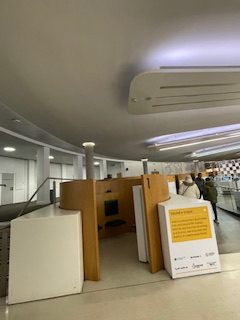
We are excited to share material from our collections through the Sound and Vision Pods at Manchester Central Library, offering free viewing and listening booths. With over 1,600 titles, including content from Archives+ partners, the pods provide a unique way to explore stories from Manchester’s communities.
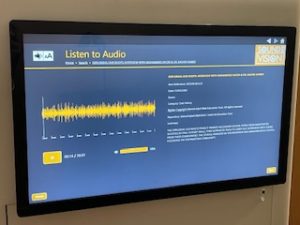
To launch this initiative, we have shared a full interview with Dr Bashir Ahmad and Mr Mohammed Wazir (GB3228.40.2.25) in the Sound Pods space located on the ground floor in Manchester Central Library. You can listen to the interview on any of the pods in this space by using the reference number above to locate the interview.
We are also highlighting six interviews from the wider Exploring Our Roots collection (GB3228.40) using this blog to explore a selection of collective themes that emerged in the interviews. The Exploring Our Roots project started in 2001 and concluded in 2005, training secondary school pupils in oral history skills, empowering them to interview elders with shared heritage background. These intergenerational conversations allowed elders to reflect on their lives while young people listened and asked questions.
Organised around shared questions young people asked, the interviews reveal personal memories and collective stories including childhood, migration, resilience, and belonging; showing the power of connecting generations through storytelling.
Childhood: Memories across generations
Childhood is frequently remembered as a time of freedom, curiosity, discovery, and creating bonds but experiences can vary greatly depending on when and where someone grew up. Listening to elders talk about their early years provides understanding into their everyday lives from the joys to the challenges, that shaped them.
Some recall their childhood as a “happy” time like Davidine, Angelica shares the sentiment and adds “Yes, very much so. Our parents loved us, and they treated us very well. We were not very rich but there was no day I could say we never had food in the house”. In contrast Euton shares “It wasn’t unhappy, and I wouldn’t say it was happy either. It was the balance of two. My conditions were not ideal. We were not a very rich family – far from it. We were a very poor family, and conditions were not ideal for most of us in those days.”
Whilst Angelica describes a world of independence and playful mischief. There were beautiful open spaces to explore, hidden huts to build, and fishponds to experiment with, all under the watchful yet hands-off eyes of parents. The freedom to organise their own games and adventures fostered creativity and connections with siblings. Others remember childhood through the lens of strict lessons and parental guidance, where learning to navigate rules and consequences. Like Gerry’s story of a childhood mishap with his father which left lasting impressions about responsibility and life lessons.
These stories highlight how childhood has changed across generations. As Judy reflects, today young people may have more structured schedules and safety-conscious environments, which can limit the same type of physical freedom from previous generations. Hearing about these past experiences helps us understand the cultures and parenting approaches that shaped their lives.
Audio Clip: Judy shares the independence she had, playing in an open space, having adventures and creating memories and bonds.
Ref: GB3228.40.2.3, Exploring Our Roots, Oral History interview with Judy Craven, interviewed by pupils from Reece Morris, Sipho Ngube, 2005, Ahmed Iqbal Ullah RACE Centre
Audio Clip: Gerry’s story of getting his leg caught on a car as a child is a relatable example of childhood mischief and parental lessons.
Ref: GB3228.40.2.4, Exploring Our Roots, Oral History interview with Gerry Darby, interviewed by pupils from Trinity High School, 2004/5, Ahmed Iqbal Ullah RACE Centre
School: A window into education
School is not just a place for learning lessons from books; it provides perception into the lives and values of past generations. Listening to the stories of those who grew up before us reveals how education shaped character, social bonds, and even the way children and young people experienced the world comparable to our own journeys and where they might differ or remain the same.
Whilst Euton describes his childhood as neither unhappy nor happy, he recalls school as a happy and engaging time, describing himself as “always one of the first to be at school” and consistently enthusiastic about learning things, doing things and playing sports. He had strong relationships with classmates and felt valued by teachers, who used to ask him to create drawings and had a high regard for him, offering extra tuition. However, financial limits meant he “couldn’t afford to pay for it outside school hours,” highlighting a contrast between his potential and his circumstances.
Whilst Judy’s memories of school in Kingston, Jamaica, shows a world where discipline and community coexisted. In her Catholic girls’ school, expectations were high, students were taught to respect teachers, follow rules carefully, and navigate both academic and social life with poise. There were rules set into place, but also laughter and teachers who guided students with kindness, creating a rich environment for learning beyond the classroom.
Other experiences show how different school could be depending on time and place. Davidine, shares whilst she was living in Malaysia, she also attended a Catholic school, but the discipline was very different where children speaking, interactions and discussions were not encouraged in school. The system was very hierarchal with students having to bow to teachers and being fined 50 cents if you were caught speaking your mother tongue or local dialects instead of English.
In contrast Gerry shares how, education doesn’t have to be a linear process. After school he decided to go straight into work but went back later in life as an adult once he felt he was ready, which was a good choice for him.
These snapshots highlight that schools could feel both restrictive and nurturing, depending on context and that each person’s experiences are unique. They also show why it’s so important to pause and make time to listen to elders to discover the challenges, and the triumphs that live in their personal stories.
Audio Clip: Davidine sharing her experience of attending a Catholic school in Malaysia and the hierarchical system between students and teachers.
Ref: GB3228.40.2.54, Exploring Our Roots, Oral History interview with Davidine Sims, interviewed by pupils from Cedar Mount High School, 2004, Ahmed Iqbal Ullah RACE Centre
Audio Clip: Gerry shares going to university later in life which highlights that education is a life-long journey and can be picked up anytime.
Ref: GB3228.40.2.4, Exploring Our Roots, Oral History interview with Gerry Darby, interviewed by pupils from Trinity High School, 2004/5, Ahmed Iqbal Ullah RACE Centre
Migration: Journeys across generations
Migration is often more than just a physical journey, it can be the seeking of opportunity, and sometimes a necessity. Listening to elders share their stories reveal the varied reasons people move, the challenges they faced, and how these decisions formed the lives of generations that followed.
Some came seeking education and stability. Davidine’s journey from Malaysia in 1973 by herself as a sixteen-year-old was prompted by political changes that threatened the education she and her siblings had been following. Adjusting to life in England brought cultural shocks like arriving from Malaysia, with a short skirt and a t-shirt, greeted by a cold grey place and being told “You’d have to wait six months until the spring for the sun to come again.” The other adjustments were the closed windows and doors in homes in England, the quietness of the countryside, and the new routines. However, there were also new opportunities for learning and growth.
Others’ stories reflect migration driven by political turbulence or war. Judy’s move from Jamaica in the late 1970s, for example, was motivated by safety concerns and the hope of building a secure family life in England. While Euton’s journey as a young Royal Air Force (RAF) recruit during World War II illustrates the extraordinary circumstances under which migration could occur. He was only 16 when Word War II started and explains how “the Royal Air Force came over in 1943 seeking recruits from the West Indian islands, because there were shortages in the Royal Air Force regarding manpower on the ground. So, they recruited a lot of us young lads – 18, 19, 20’s, in that age group – and we came over here in 1944.”
After World War II, members of the RAF from the West Indies were brought to England to serve, contributing their skills and risking their lives for the country. Yet, in 1945, the RAF repatriated many of them to the Caribbean without offering a choice, a decision later recognized as a mistake. Those who remained were pressured to extend their service to fill gaps left by demobilizing personnel, and eventually, Parliament had to pass a law forcing them to serve an additional year, removing their agency despite prior contracts.
This experience reflects the broader struggles of migrant service members, they were brought to help a nation in need, yet their rights and autonomy were disregarded, and they faced bureaucratic decisions that overlooked their personal lives and contributions. Euton reflects “the air ministry made a mistake. Well, it’s a blunder really. They considered that the sooner they get rid of us is the better, not knowing that we could fill a gap.” The lack of choice, forced extensions, and initial repatriation illustrate a systemic dismissal and unjust treatment.
There is a notable parallel to the Windrush generation (some were Veterans returning), who also arrived in Britain legally to fill gaps but were later wrongfully targeted, detained, or deported despite their contributions. Highlighting the vulnerability of migrants, even those who have risked their lives or worked to support the country, to decisions made without their consent and to the precariousness of their legal and social standing.
Migration experiences can also span multiple generations within families. Davidine’s paternal grandparents fled persecution in China, losing property and status under Mao’s communist regime. While others, like Gerry’s father, had a positive perspective of moving to England as part of wartime recruitment and felt “that it was his duty to come and fight for the Mother country”.
These stories show how migration is not just a single event but a thread connecting family histories across time and continents. Understanding different perspectives helps younger generations appreciate the challenges, resilience, and hopes that formed their families. It also highlights how migration today can look the same, with the core themes of seeking opportunity, safety, and a better future remaining constant.
Audio Clips: Davidine’s accounts of leaving Malaysia to continue her education in England and her paternal grandparents escaping persecution in China is an example of how political change and parental foresight can guide migration.
Ref: GB3228.40.2.54, Exploring Our Roots, Oral History interview with Davidine Sims, interviewed by pupils from Cedar Mount High School, 2004, Ahmed Iqbal Ullah RACE Centre
Audio Clip: Judy recalls leaving Jamaica in the late 70’s due to safety concerns and the hope of building a secure family life in England.
Ref: GB3228.40.2.3, Exploring Our Roots, Oral History interview with Judy Craven, interviewed by pupils from Reece Morris, Sipho Ngube, 2005, Ahmed Iqbal Ullah RACE Centre
Audio Clips: Euton’s journey as a young RAF recruit during World War II illustrate the extraordinary circumstances under which migration could occur and the broader struggles of migrant service members that were brought to help a nation in need
Ref: GB3228.40.2.2, Exploring Our Roots, Oral History interview with Euton Christian, interviewed by pupils from Trinity High School, 2005, Ahmed Iqbal Ullah RACE Centre
Racism: Understanding experiences across generations
Racism has appeared in many forms across generations, from overt abuse to subtle assumptions, the stories shared within this collection help us understand these experiences and their lasting impact. As well as showing how discrimination has shaped lives, how it has been confronted, and how society has or hasn’t changed over time.
John’s story illustrates how racism can suddenly become apparent in new contexts. While growing up in England, he recognized the subtler forms of prejudice, it was during his time in the United States that he fully felt the weight of racial categorization. Whilst living with a White American family he remembers “I was going to get the pizza for them and they all looked at me and said, “no, no, no…you can’t go and get the pizza in this area” because there weren’t very many Black people around and they didn’t know people would respond to me walking around to get pizza”, to being directed to “the black table” at school and being questioned about his identity at the university bookshop, he realised that assumptions about people’s race often reflect ignorance, not individual character.
Davidine, shares she “suffered ignorance about my culture instead of aggressive abuse, physically or verbally. But ignorance, yes. Some people would say, “Where are you from?” and I would say, “I’m from Malaysia, from Chinese ancestry.” And they would say, “Oh, well you all look the same to me, Japanese, Vietnamese – everybody from the Far East looks the same to us.”. Gerry also recalls the racism he endured “mainly stuff like name-calling… there were incidences of neighbours sweeping dirt outside the door” and further shares “I remember when I first got my first job, there was a really racist guy who used to come every week, he was really…always had something nasty to say, always tried to embarrass me in some way. You know, I’m talking about a grown man, and I was just a young kid… and I’ve not forgotten that because I thought, “why does he hate me that much?” when I don’t even know him.”
Judy’s experience highlights that the responsibility of combating racism also falls on those witnessing it, “The first school I taught in. I taught a family of boys and they were originally Italian, and their father came and complained to the headmaster that his son was being taught by somebody who wasn’t British and didn’t even speak English. And the Head Teacher at my school was very good, because he said to the father, he said ‘Listen to me Mister So-and-So,’… ‘I want you to understand that Mrs Craven is one of our best-qualified teachers’ – because I had a degree and I had a PGCE, and a lot of the teachers who were at the school didn’t have those qualifications.”
These encounters leave lasting impressions and show that understanding racism requires attention to both personal experience and the historical context in which it occurs. As well as insight into the past, reveal unjust resilience, and help younger generations navigate and challenge prejudice in the present.
Audio Clip: John’s reflections highlight the different ways racism and discrimination manifest.
Ref: GB3228.40.2.45, Exploring Our Roots, Oral History interview with John Amaechi, interviewed by pupils from St Thomas Aquinas RC High School, 2004/5, Ahmed Iqbal Ullah RACE Centre
Identity, heritage, and belonging: Living between worlds
Identity is never just about the place where you are born, it is shaped by experiences, beliefs, interests, heritage, and the spaces in which you grow up. Listening to people who have moved between countries reveals how culture and belonging are negotiated individually and subjectively.
Davidine’s experience shows how complicated returning to a homeland can be. Leaving Malaysia at 16, she grew up learning how to function in England rather than her country of birth. Returning as an adult, she felt like “an alien in my own country” in a place that was supposed to feel familiar: she didn’t understand the banking system, couldn’t fill out forms in Malay, and found daily routines difficult to navigate. In contrast while she was living with an English family who “were very traditional English… for a long time I wasn’t exposed to Chinese people or Chinese food”. This distance shaped her appreciation of her heritage, once she began working as a nurse and exploring Chinatown, she connected with her culture on her own terms, outside the confines of others.
Angelica provides another perspective on maintaining cultural identity across borders. Born in Ghana, she regularly visits home to reconnect with family, friends, and community. She reflects on how long absences can weaken relationships and make someone feel like a stranger in their own city or village. Celebrating Independence Day and participating in Ghanaian cultural events through the Ghana Union of Manchester allows her to preserve traditions and maintain a living connection with her heritage. For Angelica, identity is actively nurtured through travel, cultural participation, and community ties.
Other participants provide snapshots that enrich the theme. Euton recalls the strict gender roles in Jamaica compared with the flexibility he found in England. “boys aren’t allowed to be in the kitchen – ain’t allowed, (shakes head), ain’t allowed in the kitchen. If your mother see you in the kitchen – chased out. It’s a women’s work. That’s how we were brought up”. This highlights how identity is experienced and negotiated in various ways.
These experiences show that identity and heritage are not static, they are negotiated across a variety of circumstances. Returning to a homeland, balancing cultural expectations, and creating a sense of belonging in a new country all shape who people are and how they see themselves. They instil that heritage is not just about where you come from, it is about how you live, celebrate, and connect with your roots.
Audio Clip: Davidine describing her experience returning to Malaysia and feeling like an outsider.
Ref: GB3228.40.2.54, Exploring Our Roots, Oral History interview with Davidine Sims, interviewed by pupils from Cedar Mount High School, 2004, Ahmed Iqbal Ullah RACE Centre
Audio Clip: Angelica discussing the importance of visiting Ghana and celebrating Independence Day to stay connected with her culture.
Ref: GB3228.40.2.47, Exploring Our Roots, Oral History interview with Angelica Botsoe (Mama Adjoa Botsoe), interviewed by pupils from St Thomas Aquinas RC High School, 2004/5, Ahmed Iqbal Ullah RACE Centre
Community and Integration- Building connections
For many migrants, creating a sense of community in a new country is essential, both for practical support and emotional belonging. Forming bonds within one’s own ethnic group can exist alongside, and sometimes contrast with, interactions with other communities.
Davidine’s experience illustrates how cultural background shapes comfort with diversity. Having grown up in Malaysia, a multicultural society, she was used to living among people from a wide range of ethnicities and religions. Yet when she first arrived in England, she found that support from her own Chinese community was limited. “The Chinese people as a community very much keep to themselves, unless you go and seek out their help. It is unlikely that they will come and seek you out.” she reflects. Community was available, but it required initiative, highlighting the active role migrants often play in forming networks.
Similarly, John explains the difference between natural social grouping and harmful discrimination “there are a lot of religious and ethnic groups that stick to themselves and, in and of itself, there’s nothing wrong with that… however, there is a big problem if you’re not friends with somebody who’s perfectly personable and friendly because of the colour of their skin or because of their religion”.
Angelica shares how building connections can take both intentionality and openness. Upon arriving in Manchester in 1988, she recalls the first time she saw another Black person and “was so excited I felt like I was going to embrace him…we became friends, and through him I was able to meet other Black people. That made my life comfortable.” Angelica also relied on friends who she trained with in the 60’s who had settled earlier, visiting them in St. Anne’s and Ashton-under-Lyne. Even simple gestures such as greeting fellow Ghanaian shoppers, sharing information about their hometowns, helped her feel connected. She embraced wider interaction, through organisations she joined, she met people from different communities including Nigerians, Sierra Leoneans, Somalis, Pakistanis, and British locals. To bridge cultural differences, she was open, followed the cultures lead and asked questions, highlighting how integration across different heritage groups can expand understanding and create networks beyond one’s own ethnic circle.
Judy’s experience provides another snapshot of the importance of community support. When she first moved to Preston, she “really didn’t like it at all. I just felt really strange and everywhere I went everybody turned and looked at me because, you know, there’s nobody else like me around”. Later, relocating to Manchester after meeting many Jamaicans whilst teaching at a summer school she recalls “I went home and I said to my husband ‘We have to move to Manchester!’ [laughs]. And as you know, we did. We moved to Manchester four months later.” The move allowed her to find community, forming friendships that made her feel at home. These were not just social bonds, they provided practical help and emotional reassurance, demonstrating how already settled Global Majority communities serve as a vital foundation and comfort for newcomers.
Euton offers another perspective, showing how occupational environments can limit or shape community. Serving in the Air Force, he found little connection to a “local” community, relying instead on networks among fellow African-Caribbean colleagues. He shares “There’s no such thing a local community when you’re service, there’s no such a thing. Because you’re in the services. The local community can’t help you because you’re not a civilian. The only help that you could receive is from the Air Force. ‘Local community’?- that question doesn’t really arise [laughs]”. Mutual support, shared work experience, and cultural affinity became the primary mechanisms for belonging, highlighting that community is sometimes forged through circumstance rather than geography.
Together, these experiences show the dual nature of community and integration. On one hand, migrants often create tight-knit networks within their own ethnic group, providing safety, familiarity, and practical guidance. On the other, engagement with other communities, through work, organisations, or shared spaces can broaden horizons, create understanding, and foster cross-cultural exchanges. The balance between these worlds shapes how people settle, belong, and thrive in a new country.
Audio Clip: John highlights that while communities often form naturally, choosing not to befriend someone solely due to their identity reflects intolerance and contributes to social division.
Ref: GB3228.40.2.45, Exploring Our Roots, Oral History interview with John Amaechi, interviewed by pupils from St Thomas Aquinas RC High School, 2004/5, Ahmed Iqbal Ullah RACE Centre
Audio Clip: Angelica describing meeting other African and Global Majority groups through organisations and learning from them.
Ref: GB3228.40.2.47, Exploring Our Roots, Oral History interview with Angelica Botsoe (Mama Adjoa Botsoe), interviewed by pupils from St Thomas Aquinas RC High School, 2004/5, Ahmed Iqbal Ullah RACE Centre
Audio Clip: Judy recalling moving to Manchester and finding the Caribbean community, making her feel at home.
Ref: GB3228.40.2.3, Exploring Our Roots, Oral History interview with Judy Craven, interviewed by pupils from Reece Morris, Sipho Ngube, 2005, Ahmed Iqbal Ullah RACE Centre
We hope you enjoyed exploring some of the themes highlighted in these interviews. History becomes shared and understood on a deeper level by carrying stories forward and bridge generations, by those willing to share and those willing to listen.
This blog offers just small snapshots of personal and collective experiences, we encourage you to listen to the full interviews to gain deeper insights, explore more themes, and discover the value of accessing local archives focused on Global Majority experiences. To learn more about how to access this collection email us at [email protected]